

In the production of thermosetting resins and structural adhesives, consistent curing behavior is the foundation of reliable performance. Even minor deviations in reaction rate can lead to weak bonding, incomplete crosslinking, or surface defects that compromise end-use safety and durability. A gel timer delivers real-time, repeatable data on how materials transition from liquid to solid, giving manufacturers full visibility into batch consistency and process stability.
Controlling gel time directly reduces material waste and rework across production lines. Raw material variations, such as differences in initiator concentration or resin purity, often go undetected without precise testing. By using a gelation timer tester to monitor every incoming batch, quality teams can quickly flag non-conforming materials before they enter full production. This proactive check prevents costly disruptions, ensures uniform flow and wetting during application, and maintains the designed working window for mixing, coating, and bonding operations.
Process standardization becomes far easier with accurate gel time measurement. Resins and adhesives used in aerospace, automotive, and electronics require strict adherence to curing profiles to meet industry specifications. A prepreg gel timer simulates real-world processing temperatures and conditions, capturing consistent data that aligns with factory floor environments. This alignment eliminates guesswork in setting line speeds, curing temperatures, and press times, so every product cures fully and uniformly without under- or over-processing.
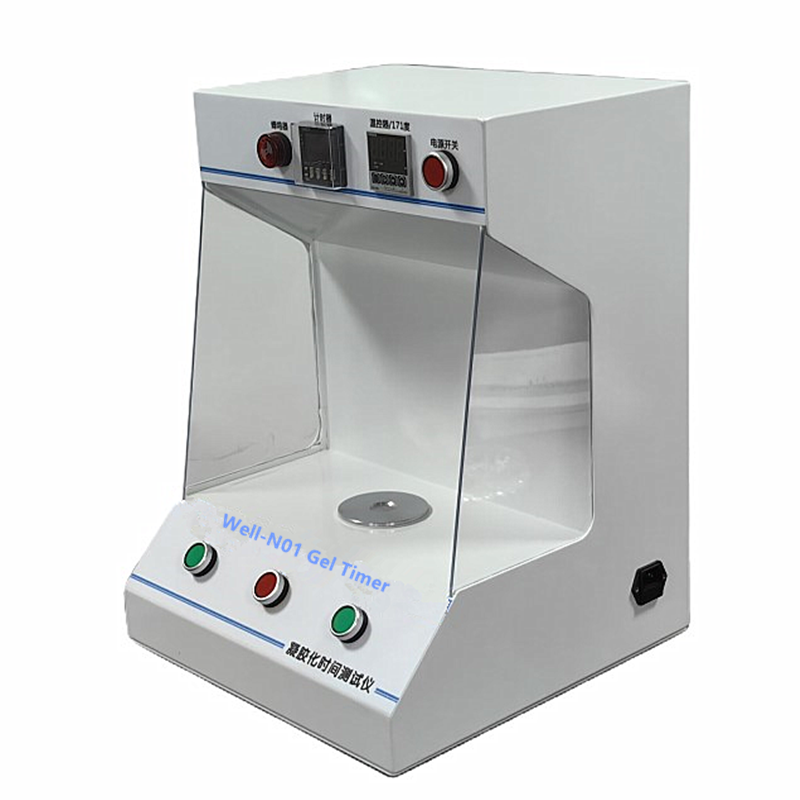
Beyond batch screening, these instruments support continuous quality improvement by building a traceable data set. Manufacturers can compare results across shifts, suppliers, and production runs to identify long-term trends in material performance. Stable gel time readings confirm that formulations remain consistent, while unexpected shifts signal potential issues with storage, mixing, or raw material quality. This data-driven approach strengthens compliance with REACH, RoHS, and industry quality standards, providing documented proof of control for audits and customer requirements.
Accurate gel time testing also enhances product performance and end-user confidence. Adhesives with controlled gel time form stronger, more durable bonds, while resins cure to deliver consistent mechanical strength and thermal resistance. By integrating a reliable testing routine, producers minimize field failures, warranty claims, and safety risks associated with poorly cured materials. Whether for small-batch custom orders or high-volume industrial production, the data from these testing tools turns subjective process judgments into objective quality benchmarks.
In summary, gelation timing equipment is more than a lab instrument—it is a core quality control pillar for resin and adhesive manufacturing. From incoming material validation to process optimization and final performance assurance, these tools reduce waste, stabilize production, and elevate product reliability. For manufacturers aiming to scale efficiently while maintaining strict quality standards, investing in precise gel time measurement delivers measurable returns in lower costs, higher consistency, and stronger customer trust.